Smiley Face History - Good or Evil?
admin Pm001, Tuesday, July 19, 2011Feelgood corporate logo, acid house icon and txt msg emoticon: one chirpy yellow emblem has kept grinning since the first summer of love. Jon Savage celebrates the life of Smiley
In the official poster for the forthcoming blockbuster, Watchmen, the Smiley badge takes centre stage. The image shows The Comedian being punched out and you see the virgin Smiley a second before it receives the small "five to midnight" blood stain that is the Watchmen logo. As anyone who has read Alan Moore and Dave Gibbons's novel will know, The Comedian's murder sets in train a sequence of events that culminates with the destruction of half of New York and a fragile world peace. In the process, the Watchmen have to confront their own contradictions and fears, their own pasts and, in some cases, their own deaths. This dystopian story features the Smiley as a key symbol; it reappears throughout the book. It works like the homicidal clown, that staple of American horror movies: a great counter-intuitive twist that pits the vapidity of everyday affirmation against an overwhelming sense of doom. The Smiley has travelled far from its early 1960s origins, changing like a constantly mutating virus: from early-70s fad to late-80s acid house culture, from millennial txt option to serial killer signature and ubiquitous emoticon. That's quite a journey for a simple logo that began in kids' TV and corporate morale-building.
The classic Smiley arrived in the early 1970s. Within a perfect circle, there is the simplest, most childlike depiction of a happy face: two vertical, oval eyes and a large, upturned semi-circular mouth. The choice of yellow as a background colour was inspired: it's the colour of spring, the sun, a radiant, unclouded happiness. While the origin of the design is contested, it seems that it first appeared during the early 1960s. In 1963 there was an American children's TV programme called The Funny Company, which featured a crude smiley face as a kids' club logo: it was shown on their caps, in the end titles and the final message, "Keep Smiling".
At the same time, Harvey Ball – a commercial artist in Worcester, Massachusetts – designed a simple Smiley for a local company, State Mutual Life Assurance. Noting the depressing ambience of the town (which is real, believe me, I've stayed there), State Mutual started "a friendship campaign" so that their employees would feel good when they interacted with the public and each other. Ball was paid $45 for 10 minutes work. However, neither he nor the company copyrighted the design, which has left its precise origins open: a Seattle designer called David Stern has also claimed authorship. But the Smiley is based on such an archetypal child's doodle that it could have come out of the ether. What is not disputed is the extent to which the Smiley took off. In September 1970 two brothers based in Philadelphia, Bernard and Murray Spain, came up with the classic Smiley design to sell novelties. Adding the words "have a nice day", the Spains shifted at least 50m Smiley badges in 1972. And that wasn't all. There was an eruption of Smiley ephemera: coffee mugs, tea trays, stationery, earrings, keyrings, bumper stickers, bracelets etc. The fad hit the post-1960s mood: a traumatised American public turning to visual soma in order to forget the war in Vietnam and presidential meltdown.
The Smiley was the perfect feelgood symbol of a moment when 1960s ideas of freedom, hedonism and experimentation hit the American masses. The fad was so mainstream that it bypassed the iconography of post-hippy rock, which, still remaining in thrall to counter-cultural ideas, ignored such mass pablum. It did hit the comics, though. In May 1972, Mad magazine published a Smiley cover – with the distinctive facial features of Alfred E Neuman contained in one of those yellow circles. A failed DC attempt from 1973/4 called Prez: First Teen President featured the first sinister use of the symbol in the figure of Boss Smiley, a Smiley-faced leader of an ultra-rightwing militia. This was prescient. The Smiley presented such a fixed facade of childlike contentment that it was ripe for subversion. Evil was rendered even more sinister by this blank, expressionless face, a trigger horror image like a girl's doll with a broken eye, a prom queen (remember Carrie?) or 1950s style suburbia.
This continued in the late 1970s. If there was one thing that punk railed against, it was false consciousness. The Smiley was an icon worth mutilating, and the cover for the UK 12-inch of the Talking Heads' Psycho Killer picked up on the Taxi Driver vibe that would later inform Watchmen with an image of a distorted Smiley on the putative killer's T-shirt. In 1979, Bob Last and Bruce Slesinger put together a collage of Californian Governor Jerry Brown and a Nuremberg-style rally to illustrate the UK Fast Records release of the Dead Kennedys' California Über Alles. Behind the podium were large red, white and black banners: in place of swastikas were large Smileys. Written during 1985 and published in 1986, Watchmen used the Smiley as a visual metaphor for a narrative that examines guilt, failure, megalomania and compromise with a corrupt power structure. All is not well beneath the idealised superhero surface, as the novel spirals into an existential crisis of betrayal, mass extinction, the transience of human existence. The Smiley is worn by the most corrupt and violent superhero, The Comedian. It even travels to Mars, when Jon and Laurie end up in the midst of a rock formation shaped like a Smiley. (Life followed art, as in early February 2008 it was reported that an orbiting satellite had spotted a big Smiley drawn on the face of the red planet).
Then came the explosion. In February 1988, Bomb The Bass released the first pop reference to Watchmen, using the blood-stained logo on the cover of their hit Beat Dis. Tim Simenon has used the Smiley repeatedly: in the videos for the summer '88 hit Don't Make Me Wait (and for last year's Butterfingers). In the previous month, Danny Rampling had used the Smiley in a flyer for his club Shoom. He'd got the idea from seeing the designer Barnzley at the Wag Club in a shirt covered "in a lot of smiley faces". Embedded into the second "o" in Shoom, the symbol took a few weeks to catch on, but when it did, it swept the country as the logo of acid fashion. As acid house became acieed that year, the Smiley flip-flopped from dream symbol to harbinger of wickedness. Just as the early days of acid were beatific, so the media's initial response to this new youth cult was positive. This changed in the autumn as "smiley culture" was associated with headlines like "Evil Of Ecstasy" and "Shoot These Drug Barons", and the fad quickly subsided.
This negative association continued into the early 1990s. Mutations of the symbol were used by Nirvana (crossed-out eyes, drooling mouth) on their famous "Corporate Rock Whores" T-shirt, as well as in the 1991 Fangoria comic Evil Ernie (angry eyes, mouth with bared teeth). During the last decade, the Smiley has become an acknowledged part of pop culture history. In the US, it's become a shorthand for the high 1970s, referenced in that great touchstone of modern history, Forrest Gump, where Tom Hanks's mud-spattered T-shirt provides the origin for the design. Quite apart from the Watchmen associations, the Smiley is coming back in the UK as part of acid retro fashion, just in time for the 20-year revival. Coincidental to this, it has also been used as a sinister signature – left at murder sites by a US group called The Smiley Face Gang who, it is alleged, have been responsible for around 40 killings. The symbol still oscillates between Heaven and Hell.
As you might expect, the Smiley has also been surrounded by copyright controversies ever since the early 1970s when a Frenchman, Franklin Loufrani registered the trademark as Smiley World in some European countries. Wal-Mart tried to copyright the Smiley in 2006, but lost the case to Smiley World. It has also swept the digital world via emoticons, suggesting various moods from confused to secret-telling, sarcastic to psychotic. (Naturally, the emoticon trademark has already been claimed, by the Russian company Superfone). It may seem weird that such a bland symbol should be used to convey emotion, in such a way that creates as much distance as real empathy. But then there is something powerfully archetypal about an image of a happy face that resembles the sun. Infantilisation or greater communication, joy or horror: the Smiley can encompass everything. It pretends to be our servant, but it will rule us all....Written by Jon Savage 2009
Genesis'88 - Original Flyers
admin Pm001, Monday, July 18, 2011Our events were called Genesis, a name that just seemed to come to us, i knew it was right as soon as i wrote it down. Not because of anything remotely connected to religion although when you look at the logo it clearly has religious connotations. That's how much affect outside influences can have on our judgments regardless of whether we're fully aware of it or not. So we found our name then constructed the logo and for the fun of it we threw in some columns. Nothing to do with religion or freemasonry...
Wayne Anthony Interview Montage - Acid House on Kindle
admin Pm001, Tuesday, July 12, 2011The Special Edition has been completely rewritten and now includes brand new stories from Wayne Anthony’s epic journey into the world of Acid House and the organisers that staged some of the biggest illegal warehouse parties in the history Great Britain. The party promoter was the first amongst his contemporaries to tell his true story to the world. Genesis is one of the founding companies that created and neutered a platform for large-scale all night dance parties. This brought Wayne and his Genesis partners to the attention of gun totting mercenaries, well known gangsters, bank robbers, and members of parliament, riot squads though worse of all The Media. This true story tells the epic tale of England’s biggest sub-cultural movement that began on the Island’s of Ibiza and Tenerife in 1987. The influence of promoters such as Wayne Anthony can be felt in almost every dance music venue in the world today. Ten years on this Special Edition goes even further into the history of the worlds biggest Acid House promoters.
Class of 88 - Book Reviews
admin Pm001, Monday, July 4, 2011'Finally, a real account of what actually happened during the rave sensation of the late eighties and early nineties. The book was written by Wayne Anthony, a well respected party organiser who went by the name 'Genesis'. This book has been slated for glamorising drug use. I disagree and feel it just tells the public what really happened.' Daniel B - Birmingham
'Well finally somebody has written a REAL life account of the true acid house experience. I'd like to thank Wayne Anthony for his effort put in doing these parties. I wish I could remember it but as the press keep saying " XTC affects the short term memory ". ' A reader from Hull
'This book turned back time for me as I went to all the genesis raves, and believe me this was exactly how it was. I thought the book was well written, and is the only real to life book which I have read where I actually felt like I was there. ' A reader from London
'Just to say that your book (Class of 88) was totally wicked and brought back some great memories. I could talk about them for hours on end' Steven Chassaigne
'Got to thank the promoters like yourself for changing my life forever was the best years of my life and the memories never go away' Leigh Kilby
'I read Class of '88 a few years ago whilst lying on a beach in Ibiza (Excellent). I've misplaced the book and am trying to get hold of it again but it seems to be out of print.' Kat P
'I just want to say your book is one of the best books I have ever read in the whole world. I really praise and look up to all you original acid house ravers. You really are amazing special people and I buzz everytime I read your book' Justin B
'I read your book a year ago after a friend in the soundsystem loaned me it. As the main organiser of our parties i read it avidly to see what i could learn and also to hear you guys used to do it. I must admit i was mightily impressed by the teamwork that went on then. It certainly dwarfs the efforts of many of todays underground systems.' Pankster
'I read class 88 a while ago and passed it on to other revellers all have seamed to have enjoyed it. But your ending do you really feel that you would not do things the same way?' Stephen b
'AFTER READING YOUR WICKED BOOK IM INTERESTED IN ANYTHING YOU HAVE TO SAY OR WRITE.THANKS VERY MUCH' si duggins
'Your book is wikkid, and still one of my favourites. It's been passed around all my mates - including one friend who hasn't read a book since his school days and he loved it! respect due' Bugs!
'i feel people like you that basically shaped the scene worldwide deserve all the props you get' pukka
'I love it! I started reading it on Friday night and ended up staying up all night to finish it ... it's wicked, you're a v. good storyteller. It's fantastic, it really is. 11 out of 10 and a gold star for you, young man! Emma Keyne (Clubbed.com - Editor)
'I read that book mate, quality book' DJ DeCreator
'Just like to say that i read your book, and thought it made a great read. I myself was only 10 in 1989, but my brother was at all the early genesis parties. I thought it was really frank and truthful, and i myself would have loved to have done and achieved what you have. You can proudly call yourself one of the pioneers of dance culture' Lex
'Big up your status. You guys along with Sunrise, NRG, and Biology are like my all time heroes' Fused Pirates
'I would like to subscribe as I had a copy of the book as soon as it come out but lent it to someone and never got it back (gutted) my own fault' Paul S
'i purchased your book class of 88''(the acid house experience)about a two or so years ago, might even have been longer, it was the only book i ever read in one evening, couldnít put it down' Smuff's Dick
'Its people like you who don't get the respect and publicity that DJ's might get' Travis beckett
'An exact recollection of the good 'ole days! I was only 16 yrs old at the time and the excitement was totally unreal at the time. The book really does relay that excitement that everyone felt at the time of the parties. I had butterflies constantly whilst reading this and finished the book with a big smile. Wonderful!'
'This book turned back time for me as I went to all the genesis raves, and believe me this was exactly how it was. I thought the book was well written, and is the only real to life book which I have read where I actually felt like I was there.' A reader from London
The BOLLOCKS!!!!!!!!!!!!!!!, Well finally somebody has written a REAL life account of the true acid house experience. I'd like to thank Wayne Anthony for his effort put in doing these parties. I wish I could remember it but as the press keep saying " XTC affects the short term memory ".' A reader from Hull
'Wicked. Read your book, loved it! Wasn't there as I was 13 at the time, didn't start till 91' so everyone was saying 'it was better in 88', now I say it was better in 91-92 etc Still, swings and roundabouts' Nick Coleman
'I read your book about 3 years ago really enjoyed it, keep meaning to buy the one you did about Ibiza. Keep up the good work' Kirsty
'Read the book last year mate, quality read got it in an HMV 2 for £10 with Bez's book. Both very enlightening!' Hilty
Class of 88 - The True Acid House Experience (Special Edition) OUT NOW
admin Pm001, Wednesday, June 29, 2011The Special Edition 2011 has been completely rewritten and now includes brand new stories from Wayne Anthony’s epic journey into the world of Acid House and the organisers that staged some of the biggest illegal warehouse parties in the history Great Britain. The party promoter was the first amongst his contemporaries to tell his true story to the world. Genesis is one of the founding companies that created and neutered a platform for large-scale all night dance parties. This brought Wayne and his Genesis partners to the attention of gun totting mercenaries, well known gangsters, bank robbers, and members of parliament, riot squads though worse of all The Media. This true story tells the epic tale of England’s biggest sub-cultural movement that began on the Island’s of Ibiza and Tenerife in 1987. The influence of promoters such as Wayne Anthony can be felt in almost every dance music venue in the world today. Twenty years on this Special Edition delves even further into the history of the worlds biggest Acid House promoters.
Works on ipads, imac, iphone, itouch, PC's
and Android devices
‘ It’s gonzoid journalism of the best get-stuck-in-kind, with more parties, drugs, blags and scrapes with the law than a lifetime of tabloids could produce. And it still tells us everything the academics come out with.... ‘ NME ( APRIL 98 )
‘ Wayne was at the forefront of a revolution for Britain’s youth as they rejected boozy fights on a Friday night for an unprecedented unity on the dance floor. And the catalyst was Es and binding beats ‘. EAST LONDON ADVERTISER ( FEB. 98 )
Class of 88 - Dreaming in Colour
admin Pm001, Friday, June 24, 2011The original book was written around 1997 and published in celebration of a decade since the offset of Acid House in 1998. I felt both honoured and privileged to have the book published by Virgin Books. Mainly because i had a gut feeling from the very beginning that Richard Branson's company may well publish the book considering the entire movement was started from a club belonging to him.
Don't ask me how i knew but even though i hadn't written anything beyond two pages i just knew that virgin would publish it. Not because it was a great work of art but because it epitomised a great movement of people that filtered out into the wider world from gay club Heaven's. This was a story fit for the Virgin empire. Most professional authors need only submit a synopsis of their book to a publisher who then has a period of three months to decide whether the book can slot into their marketing machine without much effort.
Those days everyone wrote on computers but for me i needed to feel the attachment of pen against paper and so wrote the entire book out in ink before going anywhere near a computer. Not that i had a computer at that time, i'd been traveling around Australia until i hastily left. I didn't know what i was going to do next. Meanwhile certain magazines published Acid House History specials and Genesis were never mentioned yet we were there since 1988. I knew what we'd been through during that period and to think that we were being ignored and companies that came after us were getting all the praise. That really used to piss me off and most of the time you could tell the person doing the writing wasn't even there.
My Genesis partners didn't care much as they were earning big money and moved on long ago. Acid House had changed me from the core outwards and i wanted the public to understand what we were doing but more so i wanted the people that came to events like Genesis to realise how far promoters went in pursuit of what we regarded as freedom. We each had a different story to tell and i personally couldn't articulate the way anyone else felt about Acid House. That really extends to my Genesis partners as well, i remember how we felt at certain times but during the course of writing the book i didn't discuss any of the ideas with the lads i just got on with it. Writing from memory brought up much of my past and made me question everything i did and the motivation for doing it. This process helped me to grow spirituality as i came to understand myself much more due to writing about Acid House.
When i finished writing the book i contacted Virgin Books but didn't get past the main reception as she seemed to know that Virgin wouldn't be interested in a book about MDMA. She didn't even get to hear the title or my name. I just went back home and started doing rewrites for a few months before contacting Virgin for the second time. Again didn't get past the front desk and no names. I still knew it would be published by Virgin, call it a higher-self and whatever you may, i was determined that Virgin would become its home. I went back to the drawing room and continued fine tuning for a another few months until finally calling them for the third time. I was in luck, the receptionist asked me to hold the line! The cheerful sound of Virgin's newest Senior Music Editor came online and sounded quiet excited about the concept. He promised to have an answer for me within days if i got it there ASAP. It was Ian Gittins first commission at Virgin and they went all out to make it a success…
Within what seemed like a short time the book went out of print and to my surprise received overnight cult-status. I nearly fell off my chair when i noticed that readers were selling secondhand copies of my book for hundreds of pounds on Amazon. I kept a close eye on amazon and watched the price reach £500 at one stage. Tis was a great feeling i must say regardless of the fact that i'd have to sell a shitload of books to receive that royalty through book sales.
So its given me great pleasure to rewrite and add new content to the Special Edition of Class of 88 - The True Acid House Experience which is available via Kindle in advance of the paperback book which will be published either later this year or early next year…
More news to follow in next few days...
Evening Telegraph - Friday 11th 1989
admin Pm001, Tuesday, October 26, 2010Record Mirror - February 1988
admin Pm001,Remember the Record Mirror? It should be noted that magazines of this sort despised Acid House, House music or electronic dance music. House music forced them to open the pages up to this new genre as it did with all the rock magazines of the period...
![]() |
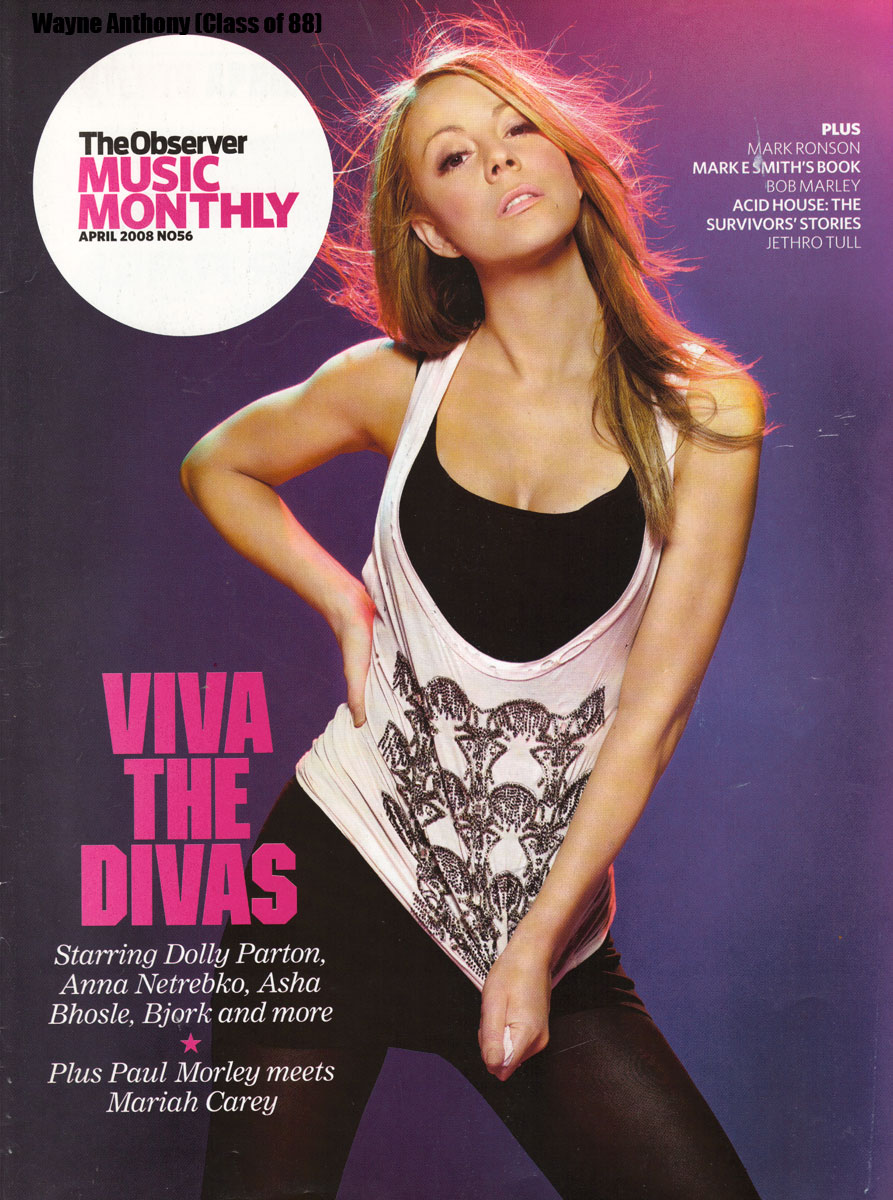
Observer Magazine - Second Summer of Love 2008 (transcribe)
admin Pm001, Wednesday, August 25, 2010Twenty years ago acid house and a new drug arrived in Britain's clubs to incite the biggest revolution in youth culture since the Sixties' summer of love. The key members of the scenes in London and Manchester talk DayGlo grins and dancing in fountains with Luke Bainbridge...
Sunday April 20, 2008 - The Observer (Original Scans Here)
At the start of 1988, the London club scene was ripe for change. Rare groove and hip hop had dominated for a few years, but a select few DJs and clubs were popularising a new music called acid house. The two formative clubs were Shoom and Future, run by Danny Rampling and Paul Oakenfold, inspired by an infamous trip to Ibiza the previous summer.
Danny Rampling (DJ and founder of Shoom): You will always get people saying 'My mate played "acid house" back in 1984,' and some of the records had been around for a couple of years, but it wasn't until 1988 that it exploded and took the whole country by storm. Myself, Nicky Holloway, Johnny Walker and Paul Oakenfold had a complete revelation in Amnesia the summer before and were totally inspired. I had a crystal-clear vision of what I wanted to create back in England, and I'm sure the others both felt the same.
Carl Cox (DJ): I supplied the sound system for the first two Shoom club nights. Danny Rampling asked me to come down because he knew I was already into the music. It was in a fitness centre on Southwark Street in south London, but what happened in there was like nothing that had gone before. This whole rare groove movement had lasted for years in London but it couldn't really go any further, whereas house music pointed the way forward.
Terry Farley (DJ and founder of Boys Own fanzine): At first you just had little pockets of people who knew about acid house. The very first people to get into it were those from London, Manchester and Sheffield who had been out working in Ibiza in the summers of 1986 and '87 and been exposed to it there.
Pete Tong (DJ): At that stage what we were playing was part acid house, part balearic and part rare groove.
Mark Moore (S'Express): It was a tiny little scene at first and felt really special. It had so much energy. At the time London was really into rare groove and hip hop and some people were saying house music is just not right for London. I remember saying if the drug of choice changes, people will get into the music, because the drug of choice then was weed. And people just laughed at me.
Wayne Anthony (promoter of Genesis raves): I had taken ecstasy in Tenerife the summer before, but it hadn't really done anything for me. Then someone took me to Future one night. I didn't really know what to expect. I turned up in a three grand suit! Everyone looked like they had just come back from Ibiza. I had half an E and was totally euphoric. There was a huge positive energy being given out by everyone and I just knew it was something special. I knew it could change my life.
Originating in Chicago in the early Eighties, house music took its name from a club called the Warehouse. What became known as acid house was characterised by the alien sounds of the 303 synth on tracks such as Phuture's 'Acid Trax', and wasn't a reference to LSD, as some assumed. But the arrival from Amsterdam of a new drug had a huge impact.
Mark Moore: It definitely took ecstasy to change things. People would take their first ecstasy and it was almost as if they were born again. They suddenly got it: 'Oh my God, this is amazing!' You could watch these people walk into the club as one person and walk out as a different person at the end of the night. We did think: 'Wow, this is going to change the entire universe. We are going to stop wars; we are going to stop people being repressed in other countries. We are going to elevate to a whole new level of consciousness.' There was this very spiritual side to it originally.
Nicky Holloway (DJ): The ecstasy and the music came together. It was all part of the package. People who hadn't done ecstasy didn't really get it, and as soon as they did an E they got it. That may sound a little sad, but there's no way acid house would have taken off the way it did without ecstasy.
Terry Farley: People were evangelical about Shoom. They saw Danny as some sort of acid house Billy Graham figure. I remember one girl telling me she could see his aura as he DJ'd, this glow around his head [laughs].
Phil Hartnoll (Orbital): It definitely came together, the drugs and the music as part of the same package. If you look back through history, new music is quite often associated with a new drug, isn't it?
Danny Rampling: The people who had been in Ibiza had brought back a bit more of a hippy-ish look - and the clubs were so hot because a lot of them were in smoky basements full of strobe lights. So, naturally, people changed their dress sense and started weating baggier clothes.
Nicky Holloway: There was no game plan, everything just seemed to come together in a way that it never has since really, from the music right down to the dress sense. Nothing like this 'new rave' scene now, which no one can pretend is really anything apart from what journalists write. There's no scene there.
Pete Tong: It was all one love, everyone together. Anyone can dance all of a sudden, freedom of expression. Dress down, not up. Converse trainers, smiley T-shirts - a sort of tribalism took over. Everyone was happy to be the same.
In the north of England, DJs were also spreading the acid house word, not least in Manchester.
Mike Pickering (T-Coy, M-People): There was quite a north-south divide at the start. People were dancing to house music for a year in Manchester before they were in London, because London was so steeped in the rare groove scene. The initial northern house movement was basically Graeme Park at the Garage in Nottingham and me at the Haçienda. I remember I did an exchange with a DJ called Simon Goth, who had a club called Fever at the Astoria. I came down in January 1988 and I distinctly remember playing [Derrick May, aka Rhythim is Rhythim's] 'Strings of Life' and getting booed. People were standing with their arms folded and someone passed me this note saying 'Why are you playing this Chicago homo music?'
Jon Da Silva (Haçienda DJ): It was still quite rare to hear the music then. If you heard someone playing acid house in a car, you would cross the street to hear it, and if you heard it coming out of someone's house, you'd want to know who lived there.
Dave Haslam (Haçienda DJ and author): In January 1988, I bumped into Tony Wilson in Manchester. I'd been in Piccadilly Records and he asked what I'd bought and I said, 'Acid house', and he picked up on the drug reference and asked, 'Is it music people take drugs to listen to?' and I said, 'No, not necessarily.' But if he had asked me the same question in March I would have said, 'Yes, usually.' Manchester has always had a big drug-taking music community and ecstasy use had spread through 1987, but it was in the first few months of 1988 that it just swamped the Haçienda.
Graham Massey (808 State): For the first few months of 1988, it still felt like there were just a few of you doing this new thing. Me and [A Guy Called] Gerald [original member of 808 State] would get the National Express to go to Aberdeen Art College or somewhere to play live and they would project porn on to you. We didn't quite fit in just yet. Then we started to get booked at soul all-dayers and we'd always be on the bill with Adamski and Guru Josh.
Mike Pickering: Nude was the first big night for acid house at the Haçienda. It had started in 1986 and I gradually introduced some acid house. By 1988 we had about 1,600 people in there and when ecstasy hit it was like a Mexican wave that swept through the club over a three-week period. Suddenly everyone was on ecstasy. I could just stop a record and put my hands in the air, and the place would erupt. The whole club would explode.
John McCready (DJ and journalist with The Face): It wasn't like anything you'd ever experienced in a club before. The clubs we'd been to previously were full of apprentices in pressed white shirts on the pull. Girls were huddled in groups like disorientated wildebeest. At the Haçienda it was almost as if a generation breathed a sigh of relief, having been relieved of the pressure of the chase. The baggy clothes desexualised the whole environment. The rising heat from 2,000 people dancing, even at the bar, in the queue for the toilets, damped down everyone. We all looked crap. If you held onto on the handrail on the balcony above the dancefloor, your palms would be dripping in accumulated human sweat. Many of the records talked about dancing as working, like 'Work it to the Bone', and suddenly the original intentions of the music started to make sense. You could feel the down when the music stopped. The room quickly went cold as all the exit doors were thrown open and we were herded out. Back to forbidding reality. Until next Friday. The whole experience was always far more addictive than the drugs. You started wanting it all to go on for ever.
Dave Haslam: Ecstasy intensified the experience and also meant the crowd were pretty responsive to dancing to music they had not heard before, which was very liberating. Although sometimes I think you could have played a recording of a Hoover and 2,000 people would have screamed with joy. Mostly when you DJ you're faced with a crowd waiting to be entertained and it's your challenge to whip them up into a frenzy. In that era it was different; you were faced with 2,000 baying people on the verge of their heads exploding. It was more like you had to hold them back, like someone trying to guide wild horses.
Danny Rampling: A lot of the old London crowd hadn't got it at first. When I played gigs in regular clubs, people were like, 'He's lost his mind! What's going on here? This is the work of the devil, I don't want anything to do with it!' So many people dissed it in the early stages, at the tail end of 1987, and then, all of a sudden, people's enthusiasm for the whole experience just exploded in a matter of weeks. I can still see the faces of people in some of the clubs, the look of bewilderment was just astonishing. It was like, 'God, you don't know what we're experiencing here, you don't know what you're missing out on.' Subsequently, a lot of those people joined the party, around the late summer of 1988, particularly a lot of the old rare groove and funky crowd. They weren't going to miss out on the greatest thing that had come along in years. Having run Future in the back room of Heaven, in early April, Paul Oakenfold opened a new club called Spectrum in the main room of the club, one of the largest club venues in central London at the time. Some viewed it as over-ambitious, but it was an almost instant success, the clearest demonstration of how quickly the acid house scene was exploding.
Mark Moore: When Paul Oakenfold opened Spectrum on a Monday night, everyone laughed and thought it would never get off the ground. But the first night 200 people came and had a brilliant time and within weeks there were queues around the block.
Paul Oakenfold: I think the moment we moved to Spectrum in the main club was when we realised just how big this thing was going to be.
Fabio (Radio One DJ): My first proper exposure to acid house was at the first night of Spectrum. Steve Jackson, the DJ, had told us about it, but when we got down there it was pretty cold and there was a massive queue and we couldn't get in for hours. In the end Steve Jackson said to the bouncer 'Don't you know who I am?', and the bouncer said, 'Someone call a doctor, this guy doesn't know how he is.' But they let us in, and I was just completely blown away. I was a soulboy really, and I'd been through the rare groove thing, but this was something completely different. I couldn't believe the power of it. [Paul] Oakenfold was up there like a God, DJing surrounded by lasers and things, and everyone was off their heads. It was like stepping into another world. After one night I was completely and utterly hooked.
30 April: S'Express scored 1988's first acid house hit single, reaching No. 1 with 'Theme From S'Express'.
Mark Moore: I wrote the song about six months previously. I just thought they'd play it at Shoom and Future and it would be a cult record. We sent out promos but couldn't get it on the radio; Radio 1 refused to play it. Then the first week it came out it went to number 27 or 28, then the next week it went to three and Radio 1 went 'Uh-oh, we're going to look really stupid if this goes to No. 1,' so they started playing it. And it went to No. 1.
Graham Massey: It did feel like a clean page in music, like the board had been wiped clean. We managed to get some very odd-sounding records in the charts as well. The music sounded very automatic, as if the music was making the music, rather than people. You can see that in some of the early 808 State stuff like Newbuild
4 June: Nicky Holloway opened the Trip at the Astoria, in London's West End, the first big legal Saturday night acid house club.
Nicky Holloway: I was offered the chance to do something at the Astoria, because they had a seven-week gap in their diary when someone cancelled. So I thought if we could close off the upstairs we could maybe fill the downstairs part of the club, which was 600 people. But on the opening night we had 1,200 people.
We called it the Trip and the first night was 4 June 1988. It was just really lucky timing really. The only two style magazines at that time were i-D and the Face, and they both had huge features in their June issue on acid house, which came out the week before we launched the Trip. I had no idea they were coming out, but it couldn't have been better timing for me. It meant we were full from day one.
Mike Pickering: Nicky Holloway booked me to DJ and T-Coy to play at the Trip. This was only six months after I got booed at the same venue, but when I came back down the crowd were all in bandanas and smiley T-shirts, trance dancing... and I played what was probably 70-80 per cent of the same records, and they went mental.
Nicky Holloway: At the Trip, people would refuse to go home at the end of the night. The roads would all be blocked, and people would be dancing in the fountains at the bottom of Centrepoint . The police would just be laughing because they had absolutely no idea what was going on. They didn't know what ecstasy was at this point, so they just couldn't understand. They just thought it was funny, because they could see that no one was hurting anyone else.
Fabio: It wasn't just the drugs. I think the timing and the social aspect was just as important as the drugs. It's difficult to remember now what Thatcher's Britain felt like. A lot of people were unemployed and bored, and felt very distant from everything else that was going on in society. A lot of people were searching for something, for a way out. It's difficult to recall how drab things were at the time.
Nicky Holloway: I remember standing in the club at its peak and thinking it is never going to get better than this, and it never did really, not for me. For the first time in my life I was not only DJing at the biggest and best club night, I was running it. I had to pinch myself. It was just mad. Everyone just went nuts. We all knew it was our Woodstock, our Sixties thing. We knew we were part of something that people would be talking about 20 years later, and here we are. It's amazing that most of the people who were part of the scene then are still making a living out of it now.
Fabio: Even when it really began to take off in the summer it still felt like there was only a few thousand people who were in on it. Most young people didn't have a clue. You would come out of all-night parties and bump into people in the petrol station who were on their way to work, and they would look at us like we were zombies!
13 July: The Ibiza-themed Hot night launched on Wednesdays at the Haçienda, with a swimming pool on the dancefloor and free ice pops.
Paul Cons (promoter at the Haçienda): Tony Wilson used to pay me to go to New York for a month each year for 'research' purposes, and the previous year I'd basically spent it all in the Paradise Garage on ecstasy, so I knew what was coming, and just had this idea to launch the new night with a summer beach party theme.
Paul Mason (Haçienda manager): Myself and Fred, the maintenance manager, erected this huge pool and connected all the hosepipes up we could find to the sinks behind the bars, then went to the pub for a few pints of Stella. We came back three hours later and there was just this puddle in the bottom of the pool. We ended up having to get someone to connect us up to the main water supply. Of course the next morning we then had this swimming pool full of tonnes of water in the middle of the dancefloor and we had a bloody gig that night so had to empty it quickly somehow. Peter Hook [from New Order] turned up in the afternoon and said, 'I know what to do, my kids have got a paddling pool which is the same design, just smaller. You just take one of the panels out - it's much quicker that way.' But we lost control of it and tonnes of water burst out of the cargo doors of the club. This little old dear was walking past the club pulling her shopping trolley and it washed her about 300 yards down the road.
Jon Da Silva: The first couple of weeks of Hot were reasonably 'normal', but from the third week it was mayhem. It was almost scary. I came out of the DJ booth and there was this guy with dreadlocks who was almost hysterical, crying and laughing at the same time, just blown away by the atmosphere. You almost felt like you were missing out by DJing, you wanted to be on the floor.
Hana Borrowman (Haçienda regular): I'd just turned 16 and left school when I first went to the Haçienda. It just turned everything upside down. Within weeks I'd left home and ducked out of college for a year to take it all up full-time. At £25, though, ecstasy was pretty prohibitive for us, so we all dabbled in halves and even quarters.
Dave Haslam: I was DJing at the Haçienda one evening and a girl came into the DJ box, lay down and took all her clothes off. She was naked, and started pulling at my trousers. I was wise enough to know it was E taking effect, rather than anything to do with me, but it was just one of those things; there was a lot of craziness in the air.
Hana Borrowman: The clubs soon became just the warm-up for the evening's events. Most of the real 'rave' experiences came after - at the after-hours parties in the makeshift venues and shebeens, like the Kitchen in Hulme. At 16, on small does of strong ecstasy, climbing piss-stained staircases towards the barely muffled basslines of massive speakers and entering the neon gloom of a barely lit council flat was like entering a futuristic fantasy. We used to dress in Converse booties, baggy sweats, Kickers, baseball caps and rucksacks stuffed with whistles, sweets and toys to entertain our fellow hallucinating party-goers. You would end up sitting cross-legged on the concrete floor of a car park, falling in love, staring pupil-to-dilated pupil into the eyes of boys with bowl haircuts.
Mike Pickering: That whole period just felt so special because no one had a clue what we were doing. The authorities didn't have a clue. We used to come out of the Haçienda when it finished and go back to the Kitchen in Hulme, which was just two old council flats knocked together. Funnily enough, I bumped into Noel Gallagher recently and we were reminiscing about the Kitchen and saying hardly anyone mentions it. One of the first big raves in Manchester was put on behind Piccadilly Station by Chris and Antony Donnelly. Bizarrely, it was directly opposite what is now, 20 years on, the Warehouse Project. The coppers didn't turn up until about 9am when we were sweeping up, and it was just piles of water bottles. The police were like, 'What's been going on here?' and we said, 'We've just had a private party, officer, but as you can see there was no alcohol, and Tony Wilson from Granada Reports came down as well,' and they were like, 'OK, fine.' They didn't have a clue.
Jon Da Silva: 'Voodoo Ray' was the sound of the summer of 1988 for Manchester. One of the other DJs, Dean Johnson, had told me about this music [A Guy Called] Gerald was making which sounded incredible, and I'd actually driven round Moss Side looking for him and his studio to hear it. Then one night at Hot he appeared behind the DJ booth with a 12-inch of 'Voodoo Ray'. I stuck it straight on, which you would never do, and it was just amazing.
In August, Tony Colston-Hayter hosted one of the first big warehouse raves at Wembley Studios in London, under the name Apocalypse Now, and let ITN News film the event, the first time news cameras had been let into a rave. On 17 August, the Sun published a story about drug-taking at Heaven, owned by Richard Branson, claiming that 'junkies flaunt their craving by wearing T-shirts bearing messages like "Can You Feel It?" & "Drop Acid Not Bombs"'. Branson gave an interview to ITN denying any link between the music and drug taking, although he referred to it as 'acid rock'.
Danny Rampling: It was a bit of a worrying time really. All of a sudden, it was horror stories all round - 'This is going to be the death of our children. Who are the people responsible?' - and, of course, I was responsible for it, with a handful of other individuals. My wife at the time, Jenni, said, 'No matter what you do, do not become a spokesperson for this movement, because you will just get nailed,' and she was so right. Tony Colston-Hayter became a spokesperson and ended up with MI6 on his tail and his phone was bugged. It was a pretty frightening time.
Paul Oakenfold: As usual, the tabloids blew everything up and sensationalised it. They even tried to use the drugs issue, which was fabricated, to put pressure on Richard Branson to close down Spectrum, but, to his credit, he wasn't having any of it. Despite, or perhaps because of the tabloids' interest, acid house parties got bigger and bigger.
On 10 November, Wayne Anthony held the first Genesis warehouse party in Aldgate, east London.
Wayne Anthony: I had already worked in the music business with Mel & Kim, and, once I'd been to a few acid house parties and saw it was just a sound system and a few lights, could see there was an opportunity for someone to do it properly. A lot of the parties were in derelict buildings and quite unsafe, so I thought there was a gap to do this a bit safer. The police didn't have a clue, so once you knew how to placate them it was quite easy. We would look for a warehouse that was up for let and in decent condition, and then we would break in. The only other promoter who was trying to do it on the same scale as us was Tony Colston-Hayter and his Sunrise outfit. Our first party was a couple of hundred people and then the second, a week later, was over a thousand people - and it was amazing.
Danny Rampling: When it exploded it was taken out of the hands of the original people, which caused a funny Animal Farm-type situation. Previously it had all been 'We're all equal, love and peace' and all of a sudden, there was a bit of snobbery and people taking the mick out of these newcomers who didn't quite get it, and calling them Acid Teds and Acid Sheep. People were pissed off that they didn't have control over it any more, but you can't control these things once they explode.
Mark Moore: When the big raves started the elite would be like, 'Oh, my God, you didn't go there, did you?' They really looked down on it; they thought they were just full of the hoi polloi. But if you look back at footage of those first raves everyone is completely off their heads but looks so innocent and natural. It was beautiful and I thought, 'This is a great atmosphere, there's nothing wrong with this.'
Wayne Anthony: Within a matter of weeks we had become the biggest promoters. We found this amazing warehouse venue in Hackney, and on Christmas Eve we had nearly 1,000 people in there. I was up all night and went round to my Mum's for Christmas dinner, but didn't end up eating much. Then we had another one on Boxing Day and 2,000 people turned up. We had quite a few celebrities that night, including Matt Dillon, Milli Vanilli and Boy George. Some of the West End's biggest club owners came down to, in their own words, 'see what all the fuss is about'. They'd come to see where all their punters had disappeared to and were gutted to find they'd lost them to a party in a warehouse on a back street in east London. We then joined forces with Tony and Sunrise for New Year's Eve in the same venue, which was the biggest and best acid party yet.
As the party continued into 1989, the focus switched more towards large-scale parties, sometimes involving 10,000 revellers, held in either warehouses or fields. Many took place around the M25, and thus became known as Orbital raves (from which Paul Hartnoll and his older brother, Phil, took the name of their band). In the north, similarly, the emphasis moved towards large raves, most famously in Blackburn. But for many of the founding fathers of the scene, nothing would ever quite recapture those heady early days.
Phil Hartnoll: The thing I remember about the time was just jumping around with excitement about the whole scene really. Just loving it. I had never really wanted to be in a band. I was just plodding along with my brother and really interested in synthesisers as a hobby. Then we thought, 'Shall we try and put a track out on record?' And we've never looked back really. I still can't believe my luck.
Liam Howlett (the Prodigy): I remember bumping into an old school friend on the train and he was like, 'You've got to come to one of these acid house parties,' so I went down to one late in the summer of 1988, but it didn't really grab me. I'd come from a hip hop background and the music was a bit too trancey for me; I was more into beats. Also, someone had told me that if you had allergies then you should stear clear of ecstasy. I don't know where the hell they got that from, but I had hayfever so that put me off taking ecstasy for a bit, which probably didn't help. To be honest, I was more into the rave scene that exploded the year after - that made much more sense to me.
Mark Moore: I don't think kids nowadays quite get how revolutionary and countercultural it felt. It changed, and stopped being about a holy sacrosanct where you knew you were going to go out and expand your consciousness and also have a fucking brilliant time. It became about just getting off your head, which was sad really.
Dave Haslam: Breaking down social and musical barriers was an important part of what was achieved. In the late Eighties, courtesy of Thatcher, communities had been fragmented, ghettoised, marginalised; but on the Haçienda dancefloor those divisions, that horrible selfishness, seemed to melt away. The best music revolutions have always been about synthesis. That's been the case ever since the birth of rock'n'roll; Elvis bringing together white country music and black rhythm and blues. We had that synthesis; influences, people, coming together.
Danny Rampling: It changed a lot of people's lives for ever. The strength of the whole experience was more than just going to a club and listening to music. It changed a million mindsets. It had a profound effect on anyone who experienced a night in a warehouse, a field, a basement or a club. And people have enduring memories to this day, quite rightly so. It was an absolutely amazing experience for a whole generation. It completely deconstructed the way we were thinking back then. If you look at youth culture now, it's just gang culture and violence and knives and just wasting that youthful energy. If only we could have it all again, because youth culture is screaming out for positive change. It really is.
Acid House Essentials
Smiley faces
Danny Rampling: I picked up on the smiley face logo from a fashion designer called Barnsley. I ran into him one night when he was covered in these smiley face badges and I thought, 'Wow! That's it! The smiley face completely signifies what this movement is all about - big smiles and positivity.' I think we first used them on the flyer for the third Shoom, and everyone picked up on it.
Lucozade and water
Danny Rampling: Everyone would just drink water and Lucozade. Unbeknown to Lucozade, the rave scene had taken their drink and used it as the drink of choice.
Dave Haslam: I remember DJing one New Year's Eve at one club and it was full, and everyone was in there for five, six hours. Afterwards the bar manager told me he'd sold just one pint of lager despite the amount of people present in the club.
Ice pops
Hana Borrowman: At the Haçienda, Hot were really good about little details. Just when the hallucinogens were kicking in and the dancefloor was so full with smoke you couldn't see or breathe, they'd hand out ice pops to everyone.
Mark Moore: Jenni and Danny Rampling used to hand out ice pops at Shoom with gay abandon to the parched and needy.
Dungarees and baggy clothes
Danny Rampling: A new dress sense was created simply in reaction to the fact that the heat was so sweltering inside the clubs, so people started wearing baggy clothes like big T-shirts and dungarees to cope with the heat. It was more about practicality and comfort than a styled look - dungarees, larger T-shirts and more ethnic clothes. It was quite anti-style because London was quite high fashion at that time.
Whistles
Hana Borrowman: Instead of jewellery, our accessories were toys and other playthings. Whistles on a string, lollipops and a Vicks Sinex. One girl always used to wear a dummy around her neck.
Genesis'88 Music Downloads Mixed by Wayne Anthony (Class of 88)
admin Pm001, Thursday, July 8, 2010Wayne Anthony - Music Mixes
Its been a while since i done a mix-tape partly because i cant actually mix and i just don't get the time these days. Of late i been downloading loads of Acid house mixes but some of them seem to feature tunes from later years instead of music from that period. I listen to my ipod everyday so decided to put some mixes together 2am on Thursday morning. The music featured on these mixes were all heard at Genesis'88 events and just about everywhere else at the time. This track list was compiled by me (Wayne Anthony - Class of 88) with Love…
When Genesis formed in 1988 it didn't matter whether a DJ could mix or not as most DJs couldn't mix properly anyway. This mix-tape follows that same principle of being governed by the music and not by what the chap is doing with the record decks. No point in complaining about it because i don't give a shite...Lots more to come!!!
Genesis88 Mixed by Wayne Anthony - Acid House 1988 PT1 DOWNLOAD http://www.mediafire.com/?v11wujvza35
Genesis88 Mixed by Wayne Anthony - Acid House 1989 PT1 ADOWNLOAD http://www.mediafire.com/?yidztor1tij
Check My Links Out;
Facebook: Class of 88 / Church of Acid House / A-Z of Acid House / Etc
My Acid House Blog: http://acidhousehistory.blogspot.com/
My YouTube Channel: http://www.youtube.com/wayneanthonys
Wayne's Profile: http://www.myspace.com/wayneanthony88
Genesis'88 Profile: http://www.myspace.com/waynenandrew
A-Z of Acid House Profile: http://www.myspace.com/azofacidhouse
Flickr - http://www.flickr.com/photos/wayneanthony/
My latest project is LSD (London Street-Art Design) Magazine…
Main: http://www.londonstreetartdesign.com
Our Daily Blog: http://londonstreetartdesign.blogspot.com/
Read Online: http://issuu.com/lsdmagazine
MySpace: http://www.myspace.com/londonstreetartdesign
Twitter: http://twitter.com/lsdmagazine
YouTube: http://www.youtube.com/LSDstreetart
Flickr Group: http://www.flickr.com/groups/londonstreetartdesign/
Digg: http://digg.com/users/wayneanthonys
Stumble Upon: http://www.stumbleupon.com/stumbler/LSDMagazine/
Sound Cloud: http://soundcloud.com/lsdmagazine
ACCCIIIIIIIIIIIIDDDDDDDD, ACCCIIIIIIIIIIIIDDDDDDDD, ACCCIIIIIIIIIIIIDDDDDDDD